
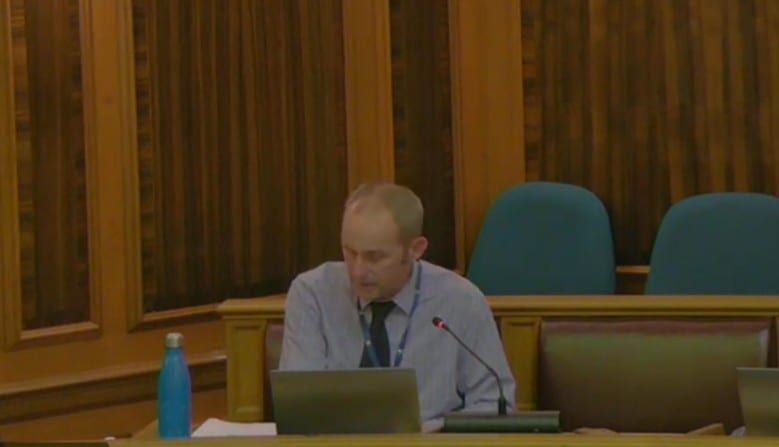
DORSET is still waiting for a £145million ‘balance the books’ payment from the Government.
Dorset is still waiting for a £145million ‘balance the books’ payment from the Government.
The money is a conditional grant intended to extinguish 90 per cent of an accumulated accounting deficit caused by education over-spends.
The payment has been promised by the end of this month.
At one point there was a warning that if the Government did not help out Dorset Council could be close to a technical bankruptcy – should it be forced to find the money from its own resources.
Councillors have been told this week that although the grant will be a great help and would, effectively, save £1.4m this financial year by not needing to borrow, the deficit over special educational needs funding would continue to be a problem and will immediately start accumulating again.
Said the council’s senior treasury officer David Wilkes: “the concern is that beyond this financial year we can expect external borrowing to rise again, driven by SEND deficits. The £145m is really welcome but the underlying issue of SEND funding continues.”
The Government grant, with similar payments to many other authorities, is conditional on agreement over a three year Dorset SEND reform plan which received Ministerial approval in October making the authority eligible for a refund of grant covering 90 per cent of the deficit built up in what is known as the High Need Block.
The proposed Dorset changes included earlier intervention, more support in mainstream schools, local inclusion bases and less reliance on expensive independent or out-of-area placements.
The amounts needed for special education have been rising because of increasing costs of educating and transporting children, above the amount allowed to the council by the Government, much of it not in the direct control of the council.
In the last available full-year figures, up to November 2025, Dorset had more than 300 special-school placements averaging £66,300 a year, while the number of children with an education and care plan had risen from about 1,400 in 2013 to more than 4,400. Independent placements, often out of the county and usually run by private businesses, cost Dorset an estimated £34.1 million in 2026/27 with individual placement varying between £30,000 to £64,000 a year.
Nationally, Higher Needs block deficits are expected to reach about £6.6 billion in this financial year.
How the “debt” arose, in layman’s terms
The Government gave Dorset a ring-fenced annual pot of money to meet the additional education costs of children with SEND. The council had a legal duty to arrange suitable provision, even when the cost was higher than the Government funding. Each year’s shortfall was carried forward and added to the previous shortfall, creating the accumulated deficit commonly described as SEND “debt”.
Why spending increased so much
Several pressures combined:
More children qualified for formal support.
Dorset’s number of EHCPs rose from about 1,400 in 2013 to around 5,000 by 2026. The increase was substantially faster than the growth assumed in national funding.
Needs became more complex.
More children required intensive or specialist provision, which costs considerably more than ordinary mainstream support.
Local special schools ran short of capacity.
When suitable local places were unavailable, Dorset increasingly used independent and out-of-area schools. These can cost tens of thousands of pounds per pupil each year, before transport is considered
SEND transport also became more expensive.
Dorset’s SEND home-to-school transport expenditure rose from approximately £10.5 million in 2022 to £18.55 million in 2026
The council could not legally stop meeting needs when its grant ran out.
High Needs funding supports statutory education provision for children and young people with SEND and alternative provision. The council’s duties continued regardless of whether the annual grant allocation was sufficient.
Why it was called a debt when nobody sent Dorset an invoice
Accumulated deficit is technically more accurate.
It did not arise because Dorset borrowed £148.8 million from the Government and then failed to repay a conventional loan. Instead:
Dorset spent more from its ring-fenced schools account than it received.
Accounting regulations required the shortfall to be carried forward.
A temporary statutory override kept it separate from the council’s normal General Fund accounts.
Dorset had effectively financed the expenditure from its own cash in the meantime.
The grant limitations
Dorset’s High Needs Stability Grant is approximately £145 million, but the money is specifically restricted to addressing the historic DSG deficit. It cannot simply be redirected to roads, adult social care or general budget pressures.
Dorset covers the remaining share
Councils must cover the residual amount from their own resources. Dorset’s latest estimate puts this at around £3.7 million, with an existing DSG recovery reserve available for that purpose.
The accounting deficit is formally cleared
Because the statutory override remains until March 2028, the grant is initially held in a reserve. It is then applied to the accumulated deficit when the override ends.
The unresolved problem
The grant deals mainly with the historic deficit up to March 2026. It does not automatically solve continuing overspending.
Dorset was forecasting substantial further DSG pressure in 2026/27, and council papers warned that the accumulated deficit could again be around £150 million by March 2028 despite the historic write-off. The Government has said support for deficits arising in 2026/27 and 2027/28 will be “appropriate and proportionate”, but “will not be unlimited.”
 Planned road closures across Weymouth
 Chance to have say on climate change effects
 Facial recognition cameras used in Weymouth
 Volunteers needed for Weymouth Beach clean
 Youngsters represent Weymouth at climate conference
 Age Friendly Dorset pilot towns and parishes
 Fundraising campaign launched to secure Folk Festival
 Countdown is on for Weymouth Christmas lights switch-on
 Major to join in with Christmas carols
 Work to remove graffiti
 Plans for 3G pitch
 Investigation into damage incident